This article may contain affiliate links. If you buy through them, Living Healthy Choices may earn a small commission at no extra cost to you. Learn more.
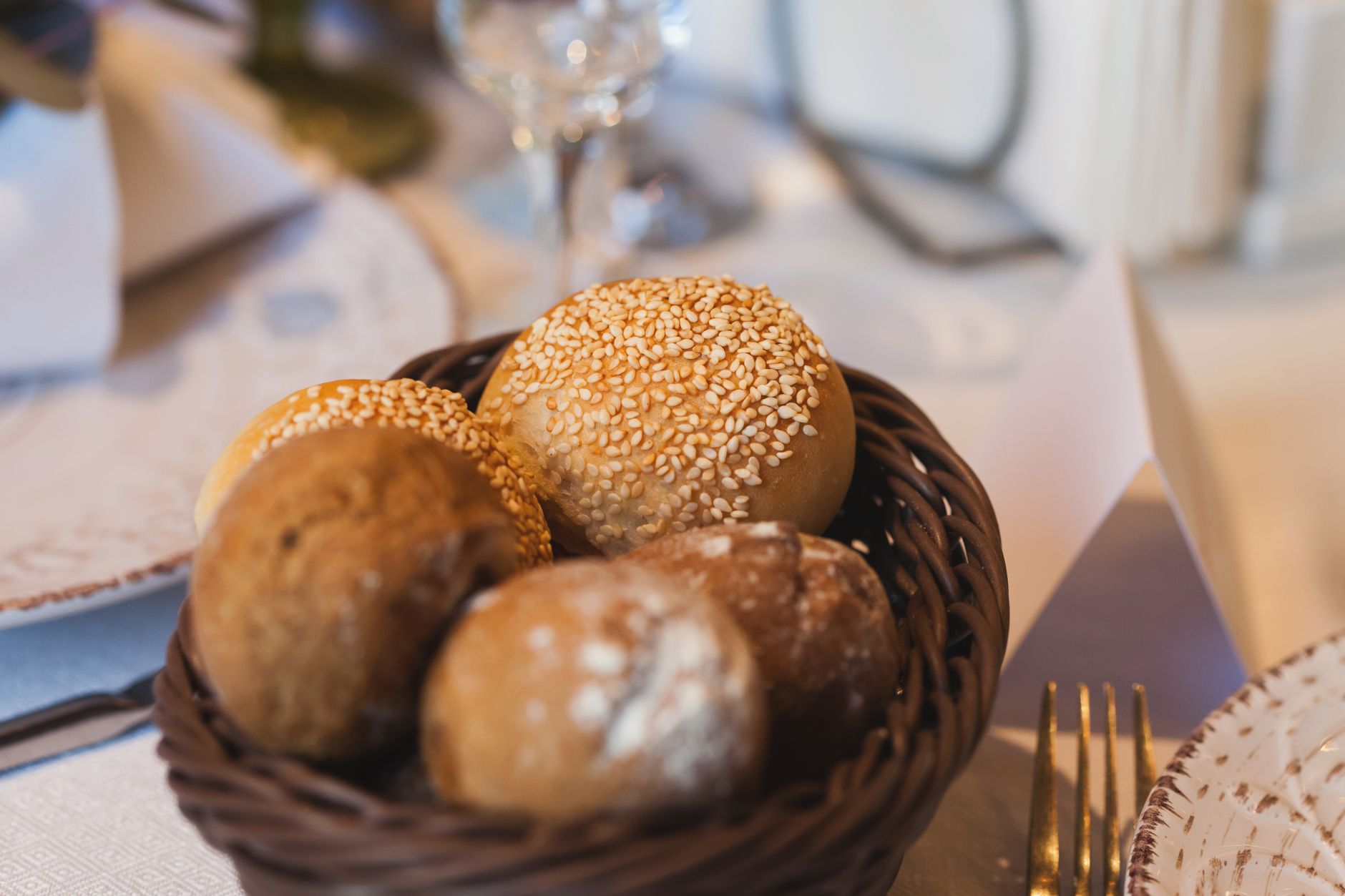
My wife and I go to the same Italian place every anniversary, mostly because the first time we went there was an accident that turned into a tradition. They bring warm bread to the table before you’ve even ordered, with good olive oil and a little dish of salt. And for something like six years running, I treated that bread basket as a small moral test I was setting myself up to fail.
I’d have a piece, feel like I’d already blown the night, and then either overcorrect by skipping the pasta course or just quietly stew about it while pretending to enjoy dinner. Either way, a decent chunk of the evening got spent somewhere other than at the table with my wife.
What was actually happening
Looking back, the bread itself was never the problem. Two pieces of warm bread at a special dinner once a year was never going to matter one way or the other. What mattered was that I’d turned a good thing, a free basket of bread at a restaurant we love, into a source of quiet dread that started the second the server set it down. I’d feel my shoulders tense up before the basket even hit the table, which is a strange thing to notice about yourself at what’s supposed to be a celebration.
My wife pointed this out once, gently, a couple years ago. She said I got a specific look on my face every time the bread came, like I was bracing for something. I hadn’t realized it was that visible, and honestly it embarrassed me a little to hear it described from the outside, because it made clear how much space this was taking up in my head for something so small.
What I did this year
This last anniversary, I decided ahead of time, before we even left the house, that I was going to eat the bread and not spend a single minute of dinner thinking about it afterward. Not a New Year’s resolution kind of decision. Just a plan for one specific evening. When the basket came, I had a piece with the good oil, we ordered our usual, and I let it be exactly as unremarkable as it should have been.
It worked better than I expected, mostly because I’d taken the decision out of the moment. There was no negotiation at the table, no calculation, because I’d already settled it before we sat down. That freed up the actual dinner to just be dinner with my wife, which is the entire point of going every year. We talked about the trip we’re planning for next spring, and neither of us mentioned the bread once, which might be the first time that’s happened at that restaurant in years.
I’d spent six anniversaries half-present because I was negotiating with bread instead of talking to my wife.
Why deciding ahead of time worked
I think the mistake I’d been making was trying to make the decision fresh every single time, at the table, with the smell of warm bread right in front of me and a waiter standing there. That’s about the worst possible moment to make a calm decision about anything. Deciding earlier, when I wasn’t hungry and staring at it, meant I actually got to enjoy the thing instead of fighting it.
It also helped that I picked one night to change, not my whole approach to bread baskets everywhere forever. I still think about it more than nothing at a random Tuesday lunch. But for one dinner that mattered, I wanted to be present for my wife instead of present for an internal argument about carbohydrates. There’s something almost silly about typing that out, but the argument had felt very real for a long time, even if it was entirely one-sided and entirely in my own head.
How it’s carried over since
It hasn’t erased the habit everywhere else. I still notice a flicker of the old reaction sometimes at other restaurants, other bread baskets, other moments where I’m not expecting it. But having one clean example of a dinner where it didn’t happen has made it easier to recognize the flicker for what it is when it shows up elsewhere, rather than assuming it’s just how I have to feel about bread forever.
My wife noticed the difference too, without me pointing it out. She said this year’s dinner felt more like the earlier ones, back before the habit had built up, when we’d just talk and eat and not think much about either. That comment mattered more to me than almost anything else about the whole evening.
What I’d tell myself a few years back
- Decide before you sit down, not while the basket is steaming in front of you.
- One meal, especially a once-a-year one, isn’t a pattern, it’s just a meal.
- If a food is making the same face happen every time it shows up, that’s worth noticing.
- Being present with the person across the table matters more than winning an argument with bread.
- A plan you make ahead of time is easier to keep than a decision you make while hungry.
We already have a reservation for next year. I plan to eat the bread again, without the internal committee meeting about it. If food-related anxiety like that starts showing up outside of one dinner a year, or starts feeling bigger than bread, that’s a good thing to bring to a doctor rather than sort out alone at a table.