This article may contain affiliate links. If you buy through them, Living Healthy Choices may earn a small commission at no extra cost to you. Learn more.
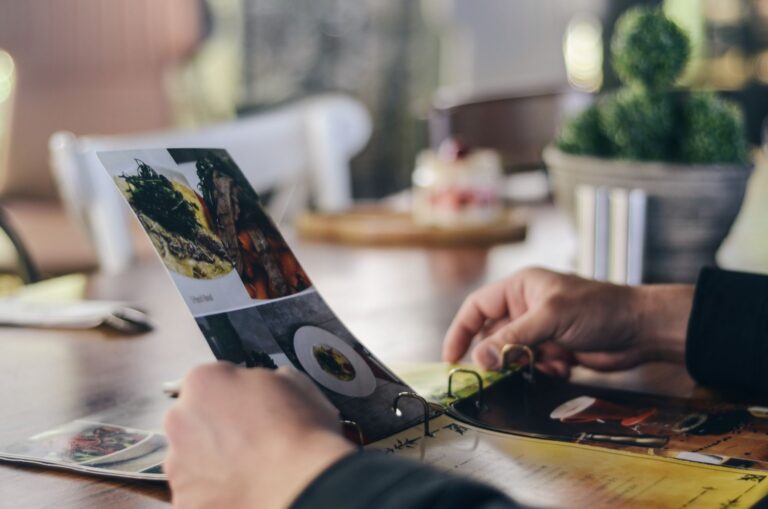
My brother turned forty at a steakhouse downtown, the kind of place with cloth napkins and a wine list heavier than the menu. I got there early, sat down, and did the thing I always do at restaurants: read every entree not for what sounded good, but for what sounded safe. Grilled over fried. Salad over potatoes. I was three minutes into scanning before I’d even said hello to half the table.
Then my brother sat down across from me, grinning, and said something like “order whatever you want tonight, it’s my treat.” And I realized I hadn’t asked myself what I wanted at all. I’d asked myself what I could defend.
Where the habit came from
I picked this up somewhere in my thirties, after a stretch where I was paying closer attention to what I ate. The habit was useful for a while. It gave me a quick filter at restaurants where the menu was long and I didn’t want to overthink every choice. But it didn’t turn off when the reason for it faded. I kept doing the math at every restaurant table, birthday or not, even when nobody was watching and nothing was actually at stake that night.
Sitting there with the steakhouse menu, I noticed the tell: I wasn’t hungry for the salad. I was hungry for the short rib. I’d just trained myself to override that signal automatically, before it even finished forming. It happened fast enough that I usually didn’t catch it in the moment. I’d just end up with the safe order in front of me and a vague sense that I’d made the right call, without ever really asking the question.
Looking back at other dinners over the past year, I could see the same pattern almost everywhere. Work dinners, dates with my wife, even a lunch with an old college friend I hadn’t seen in years. I’d scan first, want second, and by the time the want registered, the order was already halfway to the kitchen.
What I did differently that night
I closed the menu for a second and asked myself a plainer question: if this were any other Tuesday, what would I actually want to eat right now. Not what I should order. What sounded good. The short rib still sounded good. So I ordered it, and a side of the potatoes I’d have skipped automatically, and I put the menu down.
Nothing dramatic happened. I ate a good meal at my brother’s birthday and enjoyed it, which is a low bar that I somehow hadn’t been clearing for years of restaurant dinners. The short rib was good. The potatoes were better than good. And for once I wasn’t halfway through dinner already planning how I’d make up for it later, which used to be its own quiet undercurrent running beneath every meal like that.
The tell wasn’t that I ordered something rich. It was that I’d stopped noticing what I wanted before I even looked at the menu.
The part that actually mattered
What struck me afterward wasn’t the food, it was how much energy the scanning had been taking. At a table full of people I love, celebrating something good, I’d been running a quiet background calculation instead of being present. That’s the cost that doesn’t show up anywhere obvious. It’s not on a scale. It’s in how much of the dinner you actually remember afterward, and how much of it you spent half-listening to the conversation while running numbers in your head.
My sister-in-law told a long story that night about how she and my brother met, one I’d heard pieces of before but never all together. I actually listened to the whole thing, instead of nodding along while quietly negotiating with a menu I’d already closed. That’s not nothing. That’s most of what a birthday dinner is actually for.
I don’t think the answer is to never think about what you order. I still don’t want fried everything, every time, out of some point to prove. But there’s a difference between a preference and a reflex, and I’d let the reflex take over. One meal at one steakhouse isn’t going to undo years of habit, and it didn’t need to. It just needed to be one dinner where I ordered like a person having dinner with his brother, not like someone auditing himself.
How it showed up again afterward
A few weeks later I noticed the same reflex trying to kick in at a much less special lunch, just a sandwich place near my office on an ordinary Wednesday. I caught it that time too, mostly because the steakhouse dinner had given me something to compare it against. It’s easier to notice a pattern once you’ve seen it clearly once, even if you can’t always stop it right away.
I don’t think I’ve fully shaken the habit. I still catch myself scanning some days. But I know what it feels like now to skip that step entirely, and that’s made it easier to choose to skip it on purpose more often, especially on the nights that are actually supposed to be a celebration rather than just another meal to get through.
What I try to do now at restaurant dinners
- Before opening the menu, I ask what actually sounds good, before I ask anything else.
- If a dinner is a celebration, I try to treat it like one instead of quietly opting out of it.
- I let myself order dessert if I want it, rather than deciding in advance that dessert is off the table.
- I try to notice when I’m scanning for the safest option versus actually reading the menu.
- I remind myself that one dinner is one dinner, not a referendum on the whole week.
My brother’s birthday dinner ended with all of us splitting a slice of cake with one candle stuck in the middle, because the restaurant didn’t have forty. I had a bite. It was good. Nobody at that table was tracking what I ate, and it turns out I didn’t need to either, at least not that night.
If restaurant meals regularly feel like a source of anxiety rather than just a meal, or if food and eating feel tangled up with something heavier than a habit, that’s worth talking through with a doctor rather than working out alone at a dinner table.